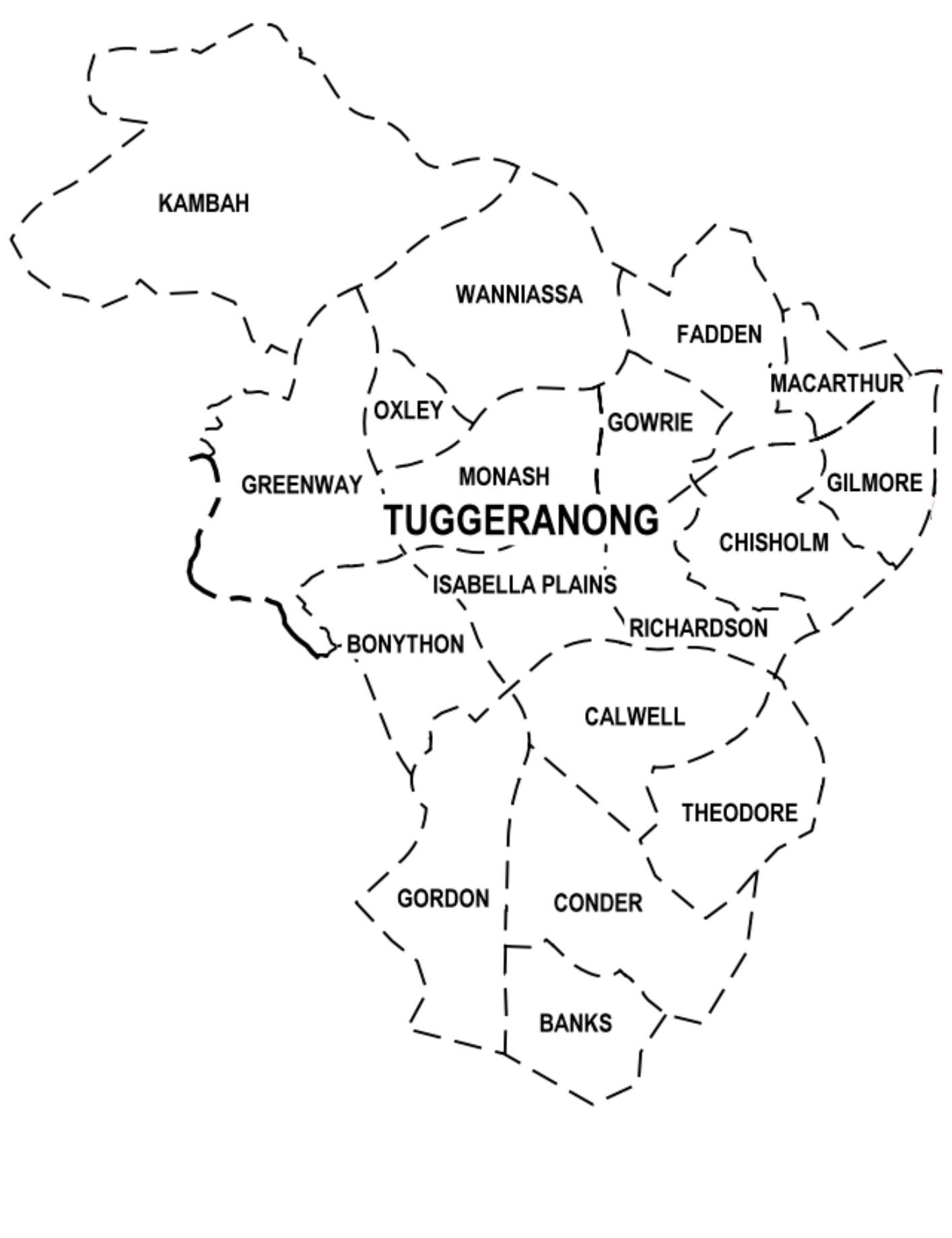
Brindabella is one of five electorates that make up the unicameral, 25-member ACT Legislative Assembly. It elects five representatives and is the largest electorate by geographic area within the ACT including the entire district of Tuggeranong, as well as the rural districts of Booth, Cotter River, Paddy's River, Rendezvous Creek, Tennent, and Mount Clear.
The name "Brindabella" is believed to come from an Aboriginal word meaning "two kangaroo rats." Today, it is widely recognised by Canberrans as the name of the mountain range that forms a striking backdrop to the city's southern skyline.
Archaeological discoveries, including cave paintings and Aboriginal artefacts, confirm that the region has been home to the Ngunnawal people for over 21,000 years. The area also lies near the traditional lands of the Ngarigo-speaking peoples. European settlement began in the 19th century, with historic properties such as Tuggeranong Station and Lanyon Homestead becoming prominent. Tuggeranong Homestead notably served as the residence of historian Dr Charles Bean while he wrote the official history of Australia’s involvement in World War I. Modern urban development in the region began in 1973, and the first families moved into Kambah in 1974.